Table of Contents
- Flickering Lights Troubleshooting: A Homeowner's Guide
- Could a Loose Neutral Wire Be Causing Your Flickering Lights?
- Why Lights Flicker When the Air Conditioner Turns On
- When Random Dimming and Brightening Signals an Electrical Hazard
- Are Flickering LED Bulbs a Sign of a Bad Dimmer or Wiring Issue?
- The Dangers of Ignoring Whole-House Flickering Lights
- Protect Your Home with Professional Electrical Troubleshooting
Flickering Lights Troubleshooting: A Homeowner’s Guide
Troubleshooting flickering lights in a house often reveals a loose neutral wire as the root cause, leading to dangerous voltage surges and unstable conditions. According to Engineer Fix, a loose neutral—often called a floating neutral—disrupts your home’s electrical balance, causing lights to flicker or brighten erratically and circuits to surge dangerously above 160 volts or drop below 80 volts, risking appliance damage and fire hazards.
This guide draws on our decades of experience serving homeowners across California and New Jersey to help you understand why flickering lights happen, differentiate harmless glitches from serious faults, and know when to call our licensed and insured electricians for a prompt, professional diagnosis. Understanding where flickering originates is the first step toward a safe home—and one common culprit that deserves immediate attention is a loose neutral wire, which can silently create hazardous conditions before you ever notice a problem.
Key Takeaways
- A loose service neutral connection is one of the most hazardous causes of flickering lights, because it destabilizes the entire electrical system rather than a single fixture.
- While a loose neutral wire can cause persistent lighting issues throughout a home, another common scenario involves lights that flicker only when a large appliance cycles on.
- Random dimming and brightening that cannot be traced to an appliance startup is a red flag for a loose neutral wire.
- Flickering LED bulbs almost always point to one of two common culprits: a dimmer switch that isn’t compatible with the bulbs, or an underlying wiring problem in the home’s electrical system.
- Whole-house flickering—where lights in multiple rooms brighten, dim, or fluctuate simultaneously—often signals a loose neutral wire, a dangerous electrical fault.
Could a Loose Neutral Wire Be Causing Your Flickering Lights?
A loose service neutral connection is one of the most hazardous causes of flickering lights, because it destabilizes the entire electrical system rather than a single fixture. When the neutral wire’s bond to the transformer’s center tap is compromised, the home’s two 120-volt “legs” can shift wildly, placing unpredictable voltages across circuits.
With a balanced system, all of the voltage is evenly distributed, but with a loose connection the voltage becomes unbalanced. This can also lead to appliances behaving badly. A loose neutral effectively places the two 120-volt circuits in series across the full 240-volt supply, so voltage no longer stays balanced and instead divides unevenly based on the resistance of whatever is plugged in. It’s also possible for other electronics to shut off, reboot, or become unstable. Audible humming or burning odors coming from your breaker panel are warnings that arcing or overheating is underway.
This “floating neutral” condition doesn’t just damage electronics; it can energize metal appliance casings and create a real shock risk. Engineer Fix emphasizes that the safest immediate response is to turn off the main breaker and call a professional. Because the loose connection is often inside the meter socket, service drop, or panel, places only a licensed electrician should touch, do-it-yourself repair is never appropriate.
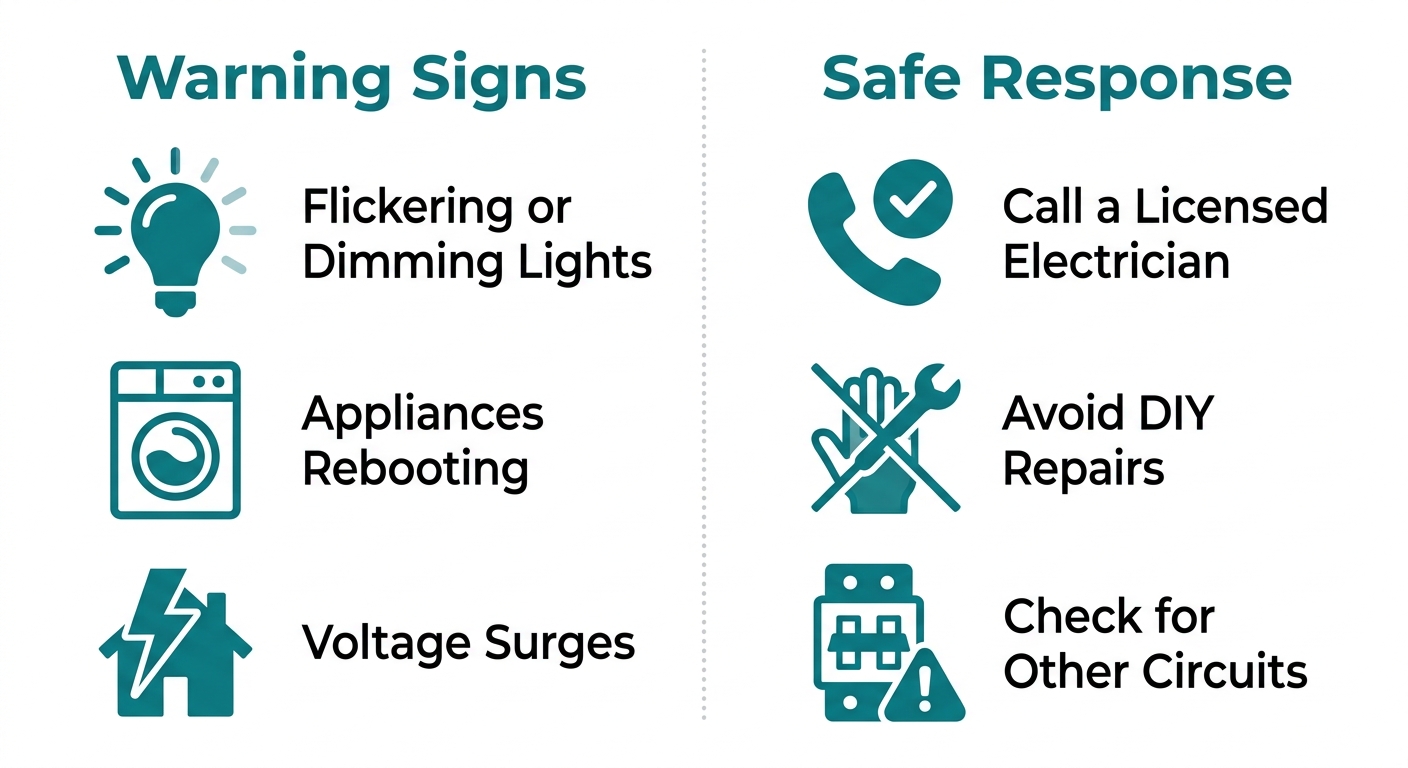
While a loose neutral is a critical concern, another thing that can cause lights to dim or flicker is the large surges that happen when an air conditioner, or other high-demand appliances, kicks on. If you can’t trace it to a single appliance or room, we recommend having a licensed electrician inspect the service wiring right away. Our team is available for same-day service and gives clear, up-front quotes for all work that’s done.
Why Lights Flicker When the Air Conditioner Turns On
While a loose neutral wire can cause persistent lighting issues throughout a home, another common scenario involves lights that flicker only when a large appliance cycles on.
The root cause lies in the significant power demand required to start an air conditioner’s compressor. When the thermostat signals the AC to begin cooling, the compressor motor draws a brief but substantial surge of electricity—typically three to five times its normal running current. This inrush current momentarily depresses the voltage available to other circuits sharing the same electrical service, and lights on those circuits respond to even small voltage fluctuations by dimming or flickering for a split second.
Older homes and properties with undersized electrical panels often experience more noticeable flickering when the AC starts. A 100-amp service panel that once adequately powered a home may struggle to accommodate the sudden draw of a newer AC unit.
Occasional, brief flickering limited to the moment the air conditioning system turns on is typically normal and not a safety concern. However, if lights dim and stay dimmed while the air conditioner is running, if there is a buzzing sound from the electrical service panel, or if there is a burning smell near switches or outlets, these conditions may require the services of a licensed electrician. These may indicate loose connections, undersized wiring, or an overloaded circuit. A licensed electrician can perform a thorough electrical safety inspection to identify the underlying cause.
We have over 25 years of experience serving California and New Jersey homeowners. With licensed, insured, and background checked electricians, we are able to safely diagnose the issues and give recommendations. We also give fixed quotes before starting the work, so you know the cost and the extent of the repair.
Flickering during the startup of your AC may not be a big concern. However, dimming and random brightening of lights when no large appliance is running may signal a different and more serious hazard. That hazard can point to loose connections, deteriorating conductors, or utility-side problems that can escalate into fire risks or equipment damage if left unaddressed.
When Random Dimming and Brightening Signals an Electrical Hazard
Random dimming and brightening that cannot be traced to an appliance startup is a red flag for a loose neutral wire. In a 120/240-volt system, the neutral provides a stable reference, keeping each 120-volt leg balanced. A failing neutral breaks that reference, causing the two legs to act as a series across 240 volts; voltage then shifts unpredictably based on load resistance. As a result, lights in one room may suddenly brighten while those in another dim, often accompanied by buzzing from the panel or an acrid odor near outlets.
Unlike the brief flicker that occurs when a refrigerator or air conditioner cycles on, this is not a normal, expected event. That momentary dimming is predictable and isolated to the appliance circuit. When the dimming is random, persistent, and affects multiple rooms without a clear trigger, a floating neutral is the likely culprit. The condition generates arcing and overheating that can melt insulation and start a fire. It can also energize metal appliance casings, creating a shock hazard, and send voltage spikes that destroy sensitive electronics. A loose neutral is an urgent electrical emergency that requires immediate professional attention.
If you experience these symptoms, switch off the affected breakers if it is safe to do so, then call a licensed electrician without delay. At Local Trusted Electricians, we provide 24/7 emergency response across California and New Jersey with licensed, insured, and background-checked electricians. We deliver transparent pricing with fixed upfront quotes and handle all permitting so your repair is permit-ready and built to pass inspection. If you notice overloaded electrical circuit symptoms like random dimming and brightening together with frequent breaker trips or warm outlets, a loose neutral is the likely cause—and a professional inspection is essential. Reach us at (855) 904-2285, and we will restore safe, stable power to your home.
If the flickering is limited to a specific LED bulb or dimmer, the issue may be different—continue reading to learn more.
Are Flickering LED Bulbs a Sign of a Bad Dimmer or Wiring Issue?
Flickering LED bulbs almost always point to one of two common culprits: a dimmer switch that isn’t compatible with the bulbs, or an underlying wiring problem in the home’s electrical system. The specific pattern of the flickering provides important clues when diagnosing flickering LED bulbs, helping a licensed electrician determine which situation requires attention.
Dimmer incompatibility remains the most frequent cause of LED flicker that we encounter. The typical signs are quite consistent: the bulbs flicker noticeably only when the dimmer is in use, never at full brightness, and a low buzzing or humming sound often comes from the switch itself as the electronics struggle to regulate the lower load. Another common indicator is uneven dimming performance, when the light level jumps or drops erratically instead of transitioning smoothly.
In contrast, flickering that stems from a wiring issue tends to present a broader pattern across the property. The flicker may affect more than one room or fixture and often intensifies when a large appliance such as a refrigerator or air conditioner cycles on. Unlike minor dimmer chatter, wiring-related flickering typically worsens over days or weeks and can be accompanied by other warning signs: warm or discolored switch plates, intermittent power loss at outlets, or a mild burning odor near a switch. These symptoms tell us that a loose connection, a failing circuit, or damaged insulation may be generating resistance and heat inside a wall box, a junction point, or the service panel itself. When the behavior spreads beyond a single dimmer-controlled light, the safest approach is to stop using the affected circuit and request an electrical troubleshooting inspection.
With over 25 years of experience, Local Trusted Electricians has the diagnostic tools and technical knowledge to isolate whether the source sits in a dimmer, a loose neutral, or somewhere deeper in the building’s wiring. Our licensed, insured electricians bring local expertise to every home in California and New Jersey, evaluating the entire electrical path before recommending repairs. Schedule a visit with our team to identify the problem correctly and carry out any repair needed, so your lighting works safely and dependably throughout the year.
The Dangers of Ignoring Whole-House Flickering Lights
Whole-house flickering—where lights in multiple rooms brighten, dim, or fluctuate simultaneously—often signals a loose neutral wire, a dangerous electrical fault. According to Engineer Fix, this condition disrupts the stable voltage reference in a home’s 120/240-volt split-phase system, causing electricity to behave unpredictably.
In a properly functioning panel, the neutral wire carries the unbalanced current back to the transformer, ensuring each side of the panel maintains 120 volts. When that neutral connection is loose or severed, the two hot legs effectively form a series circuit across 240 volts, with voltage dividing based on the resistance of connected appliances rather than staying fixed. As a result, some circuits can surge above 160 volts while others drop below 80 volts—far beyond safe operating limits for most household electronics.
These voltage fluctuations create immediate and long-term hazards:
- Voltage surges that can instantly destroy sensitive electronics and major appliances.
- Overheated wiring and arcing at the loose connection, which can ignite surrounding materials and start a house fire.
- Energized metal appliance casings or plumbing, presenting a serious electric shock risk.
Burning odors near the electrical panel or buzzing sounds from the service entrance are additional red flags that demand immediate action. Ignoring these symptoms puts everyone in the home at risk.
When whole-house flickering occurs, turning off the main breaker while waiting for a professional is the safest immediate step. DIY troubleshooting with live circuit breakers or attempting to tighten connections without proper training only compounds the hazard. Our state-licensed, bonded, and insured electricians have the expertise to safely diagnose loose neutral issues and restore stable voltage. We provide emergency same-day response to assess dangerous wiring conditions and perform code-compliant repairs that meet California’s strict electrical safety standards. With same-day emergency availability, we can often be on-site the same day to secure your system.
For homeowners facing persistent flickering throughout the house, the only safe course is to have a licensed professional diagnose and repair the root cause. Our electrical troubleshooting service provides that expert intervention, identifying loose neutrals, faulty breakers, or other hidden dangers before they cause harm.
Frequently Asked Questions About Flickering Lights
Could Flickering Lights be a Sign of a Loose Neutral Wire in the Panel?
Yes, flickering lights can indicate a loose neutral wire in the panel. A loose neutral disrupts the home’s stable voltage reference, causing lights to flicker or brighten erratically as voltage shifts unpredictably between circuits. This dangerous condition can also cause appliances to reboot, buzzing from the panel, or a burning odor, and it requires immediate professional attention to prevent fire and shock hazards.
Why do my Lights Flicker when the Air Conditioner Turns On?
Lights flicker briefly when the air conditioner turns on because its compressor draws a large surge of electricity to start, momentarily reducing voltage available to other circuits. A brief flicker is typically normal. However, lights that dim and stay dimmed, a buzzing sound from the electrical panel, or a burning smell near outlets may signal loose connections, undersized wiring, or an overloaded circuit that needs professional inspection.
When should I Call an Electrician for Lights that Dim and Brighten Randomly?
Call an electrician immediately when lights dim and brighten randomly without a clear appliance trigger. This erratic behavior is a red flag for a loose neutral wire, a hazardous condition that causes dangerous voltage surges, overheating, and shock risks. Unlike a brief flicker from an appliance start, random dimming affects multiple rooms and can cause fires. Shut off the main breaker if safe and seek emergency electrical service.
Are Flickering Led Bulbs a Sign of a Bad Dimmer Switch or a Wiring Issue?
Flickering LED bulbs almost always point to either a dimmer switch that is incompatible with the bulbs or an underlying wiring issue. Dimmer incompatibility typically causes flickering only when dimming, often with a buzzing sound. Wiring problems cause flickering across multiple rooms, may worsen when a large appliance cycles on, and can be accompanied by warm switch plates, intermittent outlet power, or a burning odor, requiring a professional inspection.
Is it Dangerous to Ignore Lights that Flicker Throughout the Whole House?
Yes, ignoring lights that flicker throughout the entire house is dangerous. Whole-house flickering often signals a loose neutral wire, which can send voltage above 160 volts to some circuits and below 80 volts to others, destroying electronics and causing arcing that can start a fire. The condition can also energize metal appliance casings and create a serious shock risk. Turn off the main breaker and call a licensed electrician without delay.
Protect Your Home with Professional Electrical Troubleshooting
Ignoring flickering lights throughout your home can lead to serious electrical hazards like fire and equipment damage, but professional help is available. When you need troubleshooting for flickering lights, our licensed electricians deliver reliable repairs across California and New Jersey. As electrical safety experts explain, a loose neutral wire can cause dangerous voltage surges and fire risk, so expert diagnosis is essential.
All of our electricians are licensed, insured, and background-checked, backed by over 25 years of industry experience. We provide fixed upfront quotes and manage permits to ensure every job passes inspection, so you know the cost before we start and avoid surprise fees. From diagnosing the root cause to completing permitted repairs, we handle every step. Our 24/7 same-day emergency service covers 54 cities in California and New Jersey, so help is available whenever flickering lights strike.
Call (855) 904-2285 to schedule your electrical troubleshooting service and restore safety and stability to your home.
Schedule Your Electrical Inspection Today
Now that you understand how a loose neutral wire can cause voltage surges and fire risks, professional electrical troubleshooting is the safest next step. We provide licensed, insured electricians with over 25 years of experience serving homes in California and New Jersey. Every job is backed by a fixed upfront quote so you know the cost before work begins, and all projects are permit-ready to pass inspection. Our team offers 24/7 emergency response to keep your home’s electrical system safe around the clock. We know the unique challenges of older wiring, panel capacity, and local codes in communities from Anaheim to Los Angeles. Do not let flickering lights go undiagnosed, schedule a thorough inspection today. Your family’s safety is just one call away.
Schedule Your Electrical Inspection Today