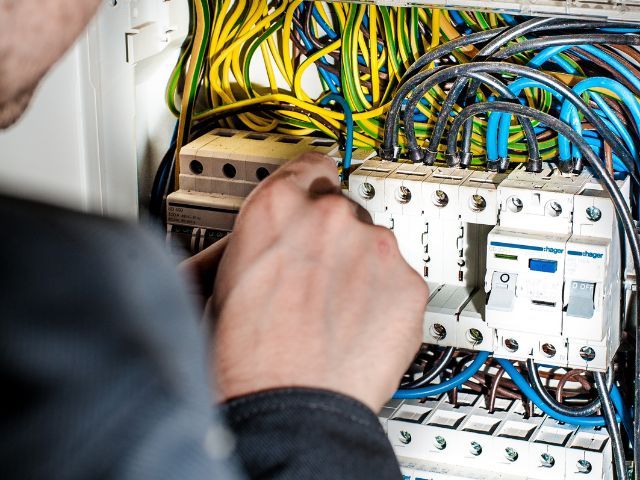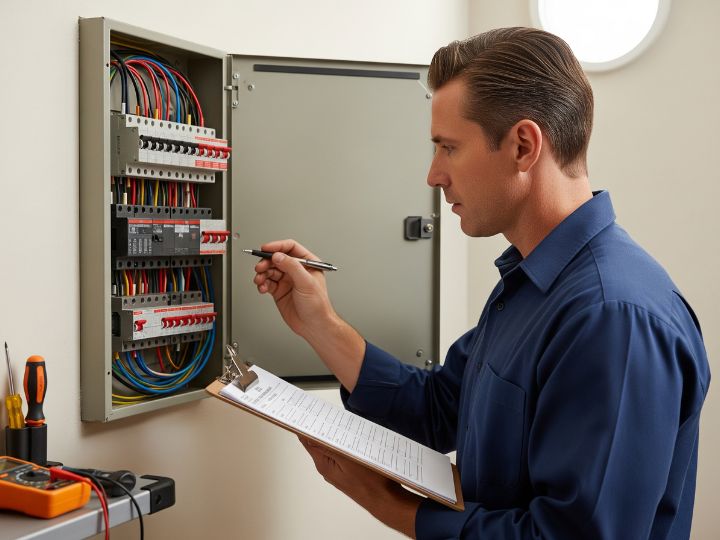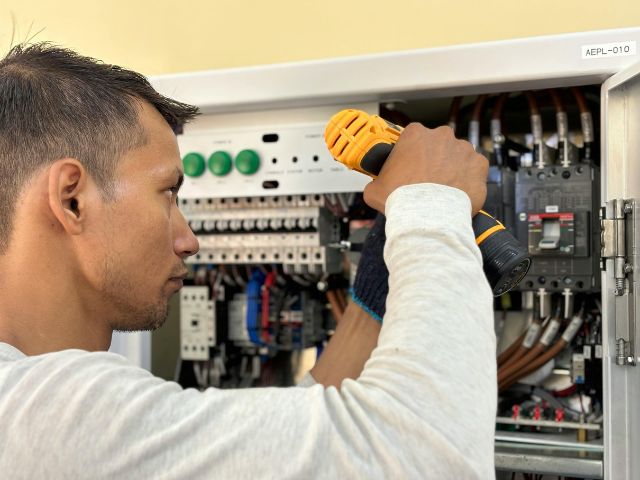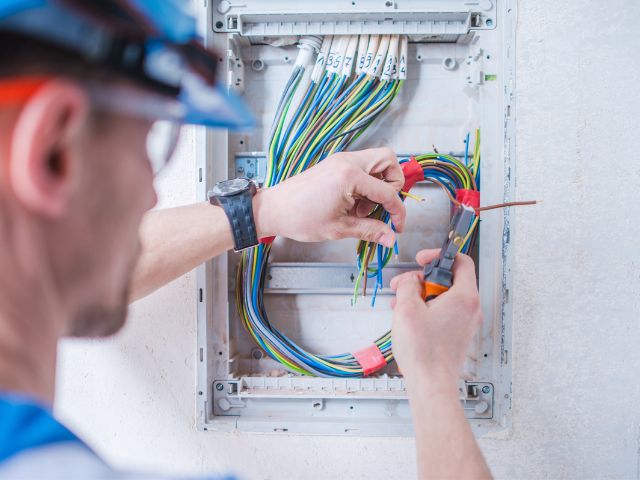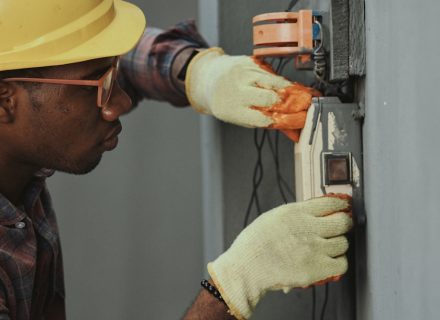
Electrical wiring carries power from your panel to every outlet, switch, and fixture in your home or business. When it is properly installed, it operates invisibly. When it deteriorates, was installed incorrectly, or cannot handle modern loads, the symptoms range from nuisance outages to genuine fire and shock hazards. Our licensed electricians handle new wiring installations, repairs to damaged or failing wiring, complete whole-home rewiring projects, and the specialized task of replacing aluminum branch-circuit wiring with safer copper. Every job uses code-compliant materials, properly protects cables from physical damage, and is tested for correct function before any wall is closed.
Every panel job is performed with code-compliant materials, filed permits, and a final inspection — not just a finished installation. We coordinate directly with your utility provider on any service upgrade requiring a meter pull, and we provide documentation of the passed inspection for your records once the job is complete.

From a single new circuit to a complete whole-home rewire, here is what the work involves.
Wiring installation covers new circuits for additions, appliances, or capacity upgrades. Wiring repair addresses damaged or incorrectly installed wiring, including charred insulation and intermittent faults. Whole-home rewiring replaces the entire branch-circuit system in older homes. Aluminum wiring replacement targets the specific fire risk of aluminum branch circuits from 1965 to 1972.
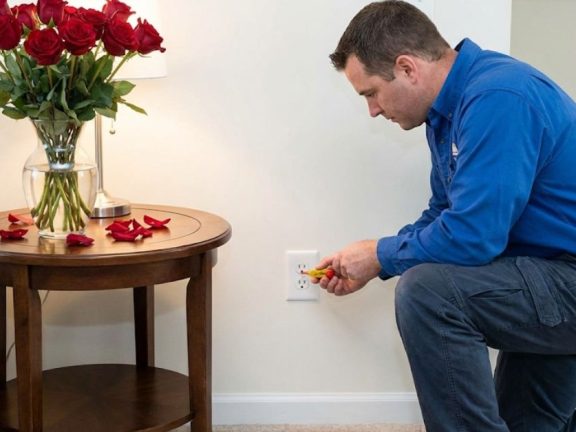
Outlets or switches that are warm or discolored, a burning smell from walls or the panel, breakers tripping repeatedly on the same circuit, flickering or buzzing lights, and shocks from outlets are all signs of a wiring fault. Homes built before 1973 with original wiring carry inherent risk regardless of symptoms.
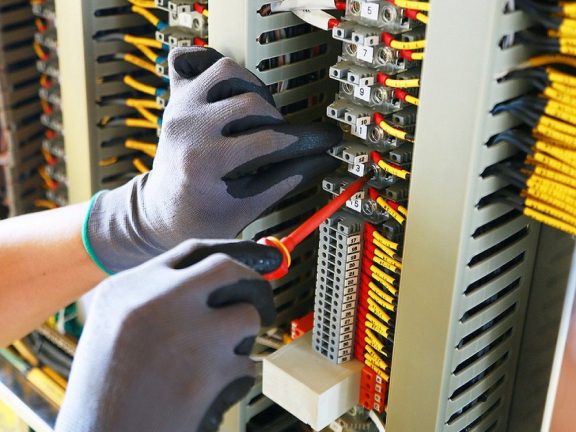
Wiring is mostly hidden inside walls and ceilings, so problems develop out of sight and can reach dangerous levels before any symptom appears. Faulty wiring is a leading cause of residential electrical fires. Professional work ensures correct conductor sizing, proper installation methods, and protection devices that remain correct for the life of the building — not just code compliance on the day of installation.
Homes built before the 1950s may still have knob-and-tube wiring, which lacks a ground conductor and has aging insulation. Homes from 1965 to 1972 frequently have aluminum branch wiring, a known fire risk at connection points. Both conditions can exist without obvious symptoms, which is why we recommend an inspection for any home with wiring this old before relying on visible signs alone.
Need something beyond wiring? Our licensed electricians cover every residential and commercial electrical service.
Fixed pricing, permits included, utility coordination handled — same-day available.