Table of Contents
Physical Security for Buildings: Essential Tools and Systems
Physical security for buildings combines hardware and electrical infrastructure to protect people and property. At its core, a reliable power and data backbone enables all modern security tools.
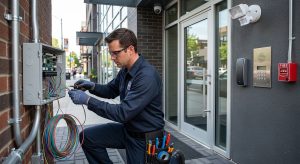
Modern access control systems—from keypads to biometric palm scanners—prevent unauthorized entry. These devices require dedicated circuits and structured cabling for reliable operation, especially when integrated with cloud-based management platforms.
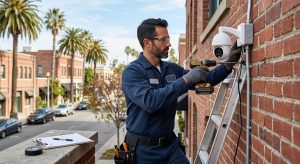
Video surveillance systems, such as IP cameras and DVRs, deliver continuous monitoring. They need proper power, surge protection, and data wiring. Staying current with physical security trends empowers your system with AI-driven threat detection and cloud-based remote access.
Fire and intrusion alarms, together with smoke detectors, are critical components of physical security in buildings. They must be installed by licensed electricians to meet code. Motion-activated security lighting is a low-cost deterrent that integrates with smart sensors. To safeguard all these investments, whole-house surge protection shields sensitive electronics.
All these systems require proper electrical infrastructure—our licensed and insured electricians ensure they are installed safely and to code. With Fixed quotes before work begins, Same-Day scheduling, and Permit-ready expertise, we bring the local knowledge needed for robust physical security.
Access Control Systems
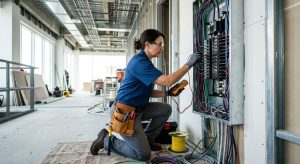
Beyond basic wiring, tenant improvement projects often need integrated security. Access control systems, a cornerstone of physical security for buildings, rely on card readers, keypads, and electronic locks to manage entry. During the electrical trim-out phase, our licensed electricians wire, integrate, and ensure code compliance—delivering permit-ready, inspection-verified solutions. Affiliated with the Merit Shop Electrical Contractor Association, we provide fixed quotes before work begins in California and New Jersey. Our security expertise also covers video surveillance systems, with same-day availability for commercial projects.
Video Surveillance Systems
Video surveillance systems are networks of security cameras and recording equipment used to monitor property activity. According to our guide on modern security, these systems deter crime, enable real-time monitoring, and capture vital evidence. Common features like high-definition video, night vision, motion detection, and smartphone access make them essential for both residential and commercial settings. Combined with access control systems, they form a comprehensive physical security for buildings strategy.
Fire Alarm Systems
As we detail in our commercial tenant improvement guide, fire alarm systems are a foundational element of physical security for buildings undergoing tenant improvements, ensuring life-safety compliance. Our Licensed & Insured electricians install code-compliant smoke detectors, heat detectors, manual pull stations, strobes, and fire alarm control panels per NFPA 72 and local fire codes. We provide permit-ready, inspection-verified work with fixed quotes before work begins, upgrading outdated systems to current standards. These systems integrate with access control systems and video surveillance systems for complete building security.
Smoke Detector Systems
Beyond wiring and panels, a critical component of physical security for buildings in Los Angeles and San Francisco is the smoke detector system. With fixed quotes before work begins, our Licensed & Insured electricians deliver permit-ready installations, integrating smoke detectors with fire alarm panels. We handle permits and inspections, integrating access control systems and video surveillance systems for enhanced physical security for buildings. This ensures safe, compliant tenant improvements.
Intrusion Detection Systems
Intrusion detection systems (IDS) are essential for physical security, alerting owners to unauthorized entry. As our guide on physical security for buildings explains, these systems demand stable power and proper wiring, and they work in concert with access control and video surveillance systems. Our Licensed & Insured electricians provide the panel upgrades, dedicated circuits, and surge protection required to keep IDS operating reliably across California and New Jersey.
Perimeter Security Systems
A critical layer of physical security for buildings is the perimeter—the outermost boundary that deters unauthorized entry and protects entry points.
Fencing, motion-activated security lighting, and access control systems form the outer defense; our licensed electricians integrate these with video surveillance systems for code-compliant, reliable monitoring.
Together, these perimeter measures strengthen overall physical security for buildings and complement interior access control and surveillance for a cohesive strategy.
Security Lighting
Security lighting is a foundational element of physical security for buildings, particularly in commercial tenant improvement projects. Motion-activated floods, energy-efficient and momentary, deter intruders, while constant floodlights provide steady perimeter coverage, improving visibility for video surveillance systems. We design and install weatherproof, code-compliant security lighting as part of tenant improvements, tailoring placement to each property’s security plan. When integrated with access control systems, this lighting helps create a complete perimeter defense for commercial properties throughout California and New Jersey.
Intercom and Communication Systems
Beyond power and lighting, intercom systems are an essential part of physical security for buildings, providing secure entry and internal communication in commercial spaces. During tenant improvements, these low-voltage systems are integrated with the building’s electrical infrastructure and often linked with access control systems and video surveillance systems for a unified security strategy. Local Trusted Electricians handles the wiring and final connections for intercom systems during tenant improvement projects, ensuring code-compliant integration and coordination with all electrical work.
Electric Locking Systems
A key trend in physical security for buildings is the advancement of electric locking systems. These electronically controlled mechanisms, such as electromagnetic locks and electric strikes, replace traditional mechanical locks, enabling remote management and integration with access control systems. The shift toward IP-based locking ties them into building management platforms for centralized control. Our Licensed & Insured electricians install these systems same-day for reliable, code-compliant security.
Surge Protection for Security Equipment
Effective physical security for buildings depends on access control systems and video surveillance systems, which are vulnerable to power surges. According to industry research from the Electrical Construction Research Organization, even small surges can degrade these sensitive electronics over time. A whole house surge protector installed by our licensed electricians protects all connected security devices. Our team can assess your property and install appropriate surge protection for your access control and video surveillance systems.
Comparing Physical Security Solutions for Your Building
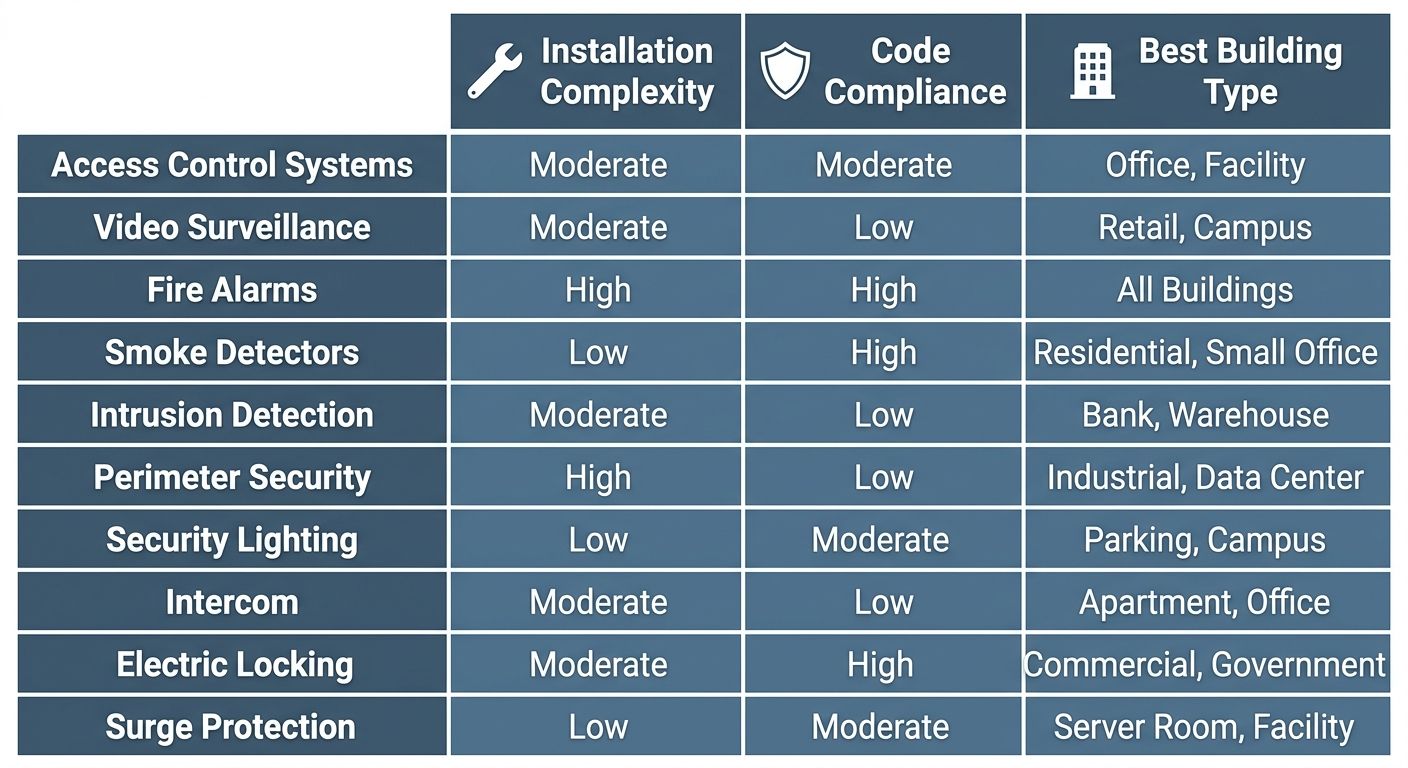
When choosing physical security for buildings, we evaluate each tool against installation complexity, approximate cost range, and local code compliance to match the right system to your building type. The following table compares these 10 physical security tools across installation complexity, cost, code requirements, and best building type. For example, access control systems in commercial offices and video surveillance systems in multi-tenant properties each have distinct requirements.
| Tool | Installation Complexity | Approximate Cost Range | Code Compliance (Local/State) | Best Building Type |
|---|---|---|---|---|
| Access Control Systems | Moderate to High | $2,000–$10,000+ | Yes (per local building & fire codes) | Commercial, multi-tenant, schools |
| Video Surveillance Systems | Moderate | $1,500–$8,000 | Varies by city; privacy laws apply | All building types |
| Fire Alarm Systems | High (requires licensed electrician) | $3,000–$15,000+ | Mandatory (NFPA, state fire marshal) | Commercial, multi-family, schools |
| Smoke Detector Systems | Low to Moderate | $500–$3,000 | Mandatory (local & state codes) | All building types |
| Intrusion Detection Systems | Moderate | $800–$4,000 | Some local permit requirements | Commercial, schools, high-value residential |
| Perimeter Security Systems | Moderate to High | $2,000–$12,000+ | May require permits for fences/gates | Commercial, industrial, schools |
| Security Lighting | Low to Moderate | $500–$3,500 | Electrical codes apply; some dark-sky ordinances | All building types |
| Intercom and Communication Systems | Moderate | $1,000–$5,000 | Low voltage code compliance | Commercial, multi-tenant, schools |
| Electric Locking Systems | Moderate | $800–$4,000 | Fire codes for egress compliance | Commercial, schools, high-security areas |
| Surge Protection for Security Equipment | Low (if installed with new equipment) | $200–$800 | Electrical code requirement for whole-building | All building types |
Several trends stand out from the comparison. Fire alarm systems demand the highest installation complexity and require a licensed electrician for code-mandated compliance under NFPA standards—a reality we see across both California and New Jersey. Meanwhile, surge protection for security equipment is a low-cost, high-value addition ($200–$800) that all building types should consider. We ensure every installation is permit-ready and inspected to verify compliance with local building and fire codes.
We recommend starting with life-safety systems—fire alarms and smoke detectors—then layering in access control and surveillance. Perimeter security and lighting round out the strategy. For additional installation standards, consult resources from the Electrical Construction Research Organization. Once you compare options, our licensed and insured team can deliver permit-ready solutions with fixed quotes before work begins.
Physical security solutions comparison chart for commercial buildings.
Building a Layered Physical Security Strategy
Effective physical security for buildings doesn’t rely on a single barrier. Instead, it uses a layered defense that blends deterrence, detection, delay, and response. This defense-in-depth approach ensures that if one layer is compromised, others remain intact.
At the outermost perimeter, fencing, gates, and security-grade lighting create a visible deterrent. Security lighting runs on weatherproof circuits and timers to stay reliable after dark. Access control systems, using keycard readers, intercoms, or biometric scanners, manage who enters a building and often require dedicated electric strike wiring and panel capacity upgrades. Video surveillance systems record activity through cameras and analytics; modern IP cameras frequently use Power over Ethernet to simplify cable runs but still need surge-protected network connections. Intrusion detection layers, including motion sensors and glass break detectors, depend on consistent low-voltage power and integration with a central alarm panel, with backup power keeping everything functional during outages. Without reliable electrical infrastructure, even the most advanced security system can fail—making professional installation a critical factor.
In our own look at the latest physical security trends, we highlight how AI-powered analytics and cloud-based management can modernize each layer, but they also place higher demands on a building’s electrical infrastructure, making professional, permit-ready installation essential for code-compliant, reliable performance.
Ultimately, a layered approach is only as strong as the electrical work that powers it, and professional, permit-ready installation is the cornerstone of building security.